How to Plan a Holiday Game Night People Show Up To
Holiday calendars eat game nights alive. Everyone loves the idea in October, then December arrives with family travel, office parties, and a group chat that scrolls past your invite. Sort out the date first, so the night you plan is one enough people can attend.
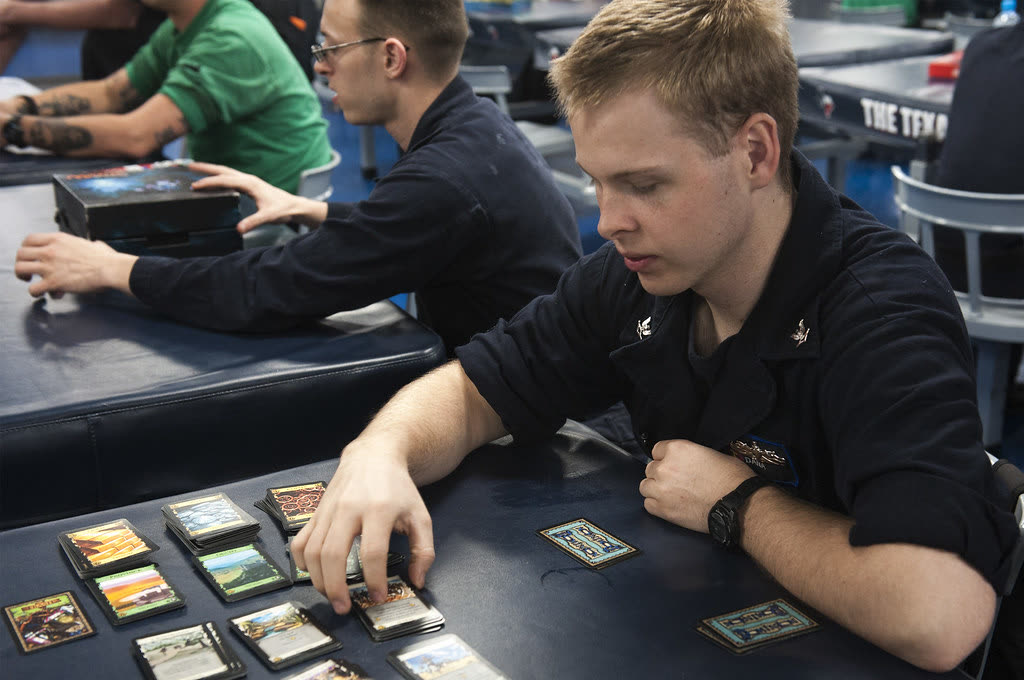
Photo: CNE CNA C6F via Flickr, public domain
How do you plan a holiday game night?
Plan a holiday game night in seven steps: lock the date early, set a quorum, name a backup date, match games to the crowd, keep food away from the cards, teach each game in minutes, and publish a start and end time. Do the first three before you think about a single game.
- Lock the date. Ask early and offer two or three candidates.
- Set a quorum. Decide how many yeses make the night go ahead.
- Pick a backup. Name a fallback date before you need it.
- Match games to the crowd. Family, non-gamers, and big groups want different things.
- Feed people without wrecking the cards. Keep the food off the table.
- Teach fast. Five minutes at the table beats a rules lecture.
- Set start and end times. Two or three games, one clear finish.
The rest of this guide walks through each step. If you run regular sessions already, the general version lives in our game night scheduling guide, and this post is the holiday edition.
How do you pick a date when everyone's calendar is full?
Ask earlier than feels necessary and never ask an open question. Send two or three specific candidate dates, try to avoid the weekend right before or after the big holiday, and let people vote. A specific question gets a fast answer. "When are you free?" gets a shrug and a thumbs-up emoji.
Timing matters because holiday plans are not a fringe problem. LifeStance Health's 2025 Holiday Mental Health Report, a Researchscape survey of 1,023 US adults, found that 64% would prefer to skip at least a few holiday gatherings, and 75% said at least a few of their planned gatherings feel more like an obligation than something they want to attend. Your game night is competing with a lot of obligations. That is actually your opening: it is the one event people pick because they want to.
I learned this the hard way. One year I floated a December game night on December 1st and got seven maybes and zero commitments, because everyone's weekends were already claimed. The next year I asked in early November and had a full table in a day. My rule now: early to mid October for Thanksgiving or Friendsgiving, early November for December. That is my experience, not a statistic, but the person who asks first tends to get the date.
Set a quorum so one holdout can't veto it
A quorum is the minimum number of people who have to say yes before the night goes ahead. Without one, you end up waiting on the last two people to reply, and the whole plan stalls on their schedules. With one, the rule is simple: if five of the eight can make it, it is on. I once ran a Friendsgiving on exactly five yeses out of nine invited, and two more people who had been on the fence showed up once it was clearly happening.
Set the number by what your games need. A word game like Codenames wants at least four. Pick your quorum, then invite two or three more than your table seats, because someone will cancel. For the concept in more depth, see what quorum scheduling is.
This is the point where a tool earns its keep. Tabletop Time checks the quorum for you and shows which dates clear the bar. Players vote from a shared link with no account and no login, and if you connect the Telegram or Discord bot, reminders go out so the date does not quietly slip off everyone's radar. It is free.
Name a backup date before you need one
Announce the backup in the same message as the main date: "We are on for the 14th if we hit six yeses. If not, we roll to the 21st." Announcing it early removes the awkward second round of polling, and it tells guests that a miss on the first date is not the end of the plan.
Pick a backup that is at least a week away and not the weekend of a major holiday. If both dates fall short of quorum, you have learned something useful: this crowd cannot do December, so try early January.
Which games work for a holiday crowd?
Choose for the people who are coming. Family tables need short rules and no elimination. Non-gamers need games where cleverness beats memorization. Big groups need games that scale past six without a wait between turns. The chart below shows player counts and play times for eight reliable holiday picks.
Takeaway: all eight charted games fit in an hour, and only Wavelength reaches a full dozen, so check your headcount against the player bar before you check your taste.
Mixed-age family
Family tables need short rules and no player elimination, since a nine-year-old watching from the couch tends to end the fun. Ticket to Ride is the safe pick: you collect cards and claim routes, and most first-timers pick it up after one round. It supports 2 to 5 players and runs 30 to 60 minutes per Ticket to Ride's Wikipedia entry, which makes it the longest game on the chart, so play it first while everyone is fresh. Telestrations is the wildcard: everyone draws badly, and that is the entire joke.
Non-gamers and Friendsgiving groups
Friendsgiving crowds usually include a few people who have not touched a board game since a family Monopoly grudge. Give them games where the fun comes from the people. Just One is cooperative, so nobody loses. Wits & Wagers is a trivia game where you bet on other people's answers, so you do not need to know anything. Wavelength has teams guess where a concept sits on a spectrum, which reliably starts arguments in a good way. Codenames also belongs here: it won the 2016 Spiel des Jahres, per its Wikipedia page, and it needs only a word-association brain.
Party-size groups of 8 and up
Big groups need games built for them. Codenames scales with team play, Telestrations handles up to 8 in the standard box (its Party Pack goes to 12), and Wavelength officially stretches to 12. If you are hosting a crowd, pick one of those and split into two tables for anything else. 7 Wonders supports up to 7 and plays about 30 minutes, a rare full-table option with a strategy layer.
Just two people
Not every holiday night is a party. If it is just you and one other person, Splendor works at 2 to 4 players in about 30 minutes, and Codenames: Duet is the two-player cooperative version of Codenames. For a full list built for pairs, see our best two-player board games for couples.
How do you run the night so it doesn't stall?
Run it like a small event: food away from the game, a five-minute teach, and a clear start and end. Most stalls come from three places: a rules lecture that loses the room, a hungry table that will not focus, or a night with no end that dies slowly at 11 p.m. Fix those and the games run themselves.
Food that won't wreck the cards
Set up a finger-food zone away from the table, with napkins in it. Anything greasy stays there: no chips at the board, no wings near the cards. Sticky fingers do to a deck what sticky fingers do to a phone screen, only permanently. Keep drinks on a side table or in lidded cups.
It also helps to keep the food simple, because hosting is already stressful. In a Peerspace survey run by YouGov of 1,080 US adults, 43% named cleanup as the most stressful part of hosting a holiday gathering and 40% named preparing food and drinks. Potluck the food, use paper plates, and put your energy into the games.
Teach a game in five minutes
Teach at the table. Say the goal in one sentence, demonstrate one turn, and start playing. Let the first round be a practice round with no penalties. I once opened a Friendsgiving with a ten-minute Wavelength explanation and watched half the room reach for their phones; when I skipped the speech at the next one and just played a demo round, we were going in two minutes. Most party games, including everything in the chart above, can be taught this way, and people learn the edge cases by hitting them.
Do not read the rulebook aloud. Nobody has ever said "I wish that lecture had been longer."
Set a start and end time
Put the end time in the invite. It sounds like a downer, but it is what lets people with a second stop or a long drive say yes. It also gives you a graceful place to stop while everyone is still having fun, which is the best way to get invited back.
On the day, a reminder nudge helps more than you would think. Tabletop Time sends reminders and has Telegram and Discord bots, so the message lands where your group already talks.
Lock the date this week
Holiday game nights usually fall through at the calendar. Pick your candidate dates, set your quorum, name your backup, and send the invite before your group's December fills up. Then choose a game that fits the headcount, keep the food off the cards, and end on time.