How to Find a D&D Group Without Losing Your Mind
Finding a D&D group used to mean asking around your dorm hallway or office break room. In 2026 it means picking the right channel out of half a dozen, since the easiest group to find is often the first one to fall apart. Finding a table is step one; keeping it alive is the real quest.
This guide covers the six channels that actually produce a seat at a table right now: local game stores and Adventurers League, Reddit's r/lfg, Discord LFG servers, StartPlaying and other paid-GM platforms, Roll20 and Owlbear Rodeo's LFG boards, and Meetup. Then it covers the part almost nobody writes about: how to tell a healthy table from a stranger's group you'll regret joining.
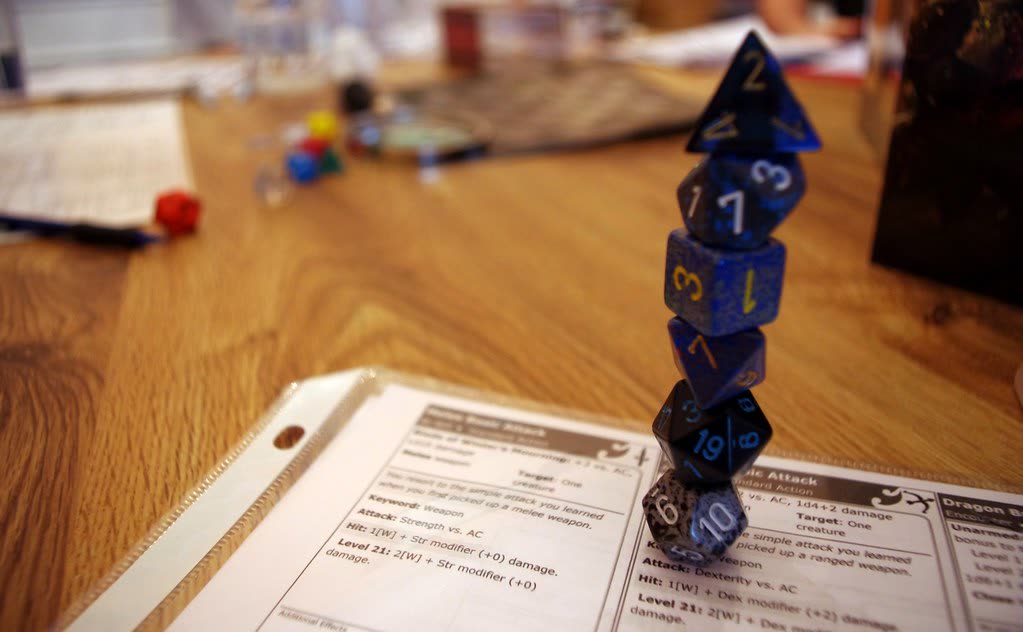 Photo: Skakerman via Flickr, CC BY 2.0
Where do D&D players actually find groups in 2026?
Six channels produce most real games: local game stores running Adventurers League, Reddit's r/lfg, Discord LFG servers, paid-GM platforms like StartPlaying, VTT-attached LFG boards (Roll20, Owlbear Rodeo), and Meetup's tabletop category. Each favors a different kind of player, so your starting point depends on in-person versus online, free versus paid, and how much vetting you want to do yourself.
None of these channels is universally "best." A store locator won't help if you can't drive to a game store on a weeknight. A Discord server won't help if you hate typing your pitch into a wall of unread messages. The rest of this guide walks through each one so you can pick the two or three actually worth your time this week.
Should you play in person or online?
In person gets you a table faster if you have a game store nearby, because Adventurers League runs drop-in sessions with no long-term commitment required. Online opens up the entire internet's worth of groups and timezones, at the cost of a slower vetting process and more written communication before anyone rolls a die.
The honest trade-off:
- In person wins on chemistry. Reading a room in real time, passing snacks, seeing who actually laughs at your jokes, none of that translates through a screen. It loses on flexibility: you need people who can physically be in the same place on the same evening, which shrinks your pool fast if you live somewhere without a strong FLGS scene.
- Online wins on reach. You can join a table with a GM in a different timezone running a system your local store never stocks. It loses on the things that make a table feel like a table: it's easier to ghost a Discord server than to skip out on people you'd see again at the store next week.
There's also a hybrid option worth naming: plenty of "in-person" groups now run on a virtual tabletop even when everyone lives in the same city, because pulling up a digital map on a shared screen is faster than hauling a battle mat to someone's kitchen table every week. Don't treat "online" and "in person" as a strict either/or when you're evaluating a group; ask what tool they actually use to run combat, since that answer tells you more about the table's habits than whether they call themselves online or in person.
Most players who stick with the hobby long-term end up doing both: an in-person home game or FLGS drop-in, plus an online table for a system or schedule the local scene doesn't cover. Neither channel is a downgrade from the other, they solve different problems, and the players with the most consistent games tend to be the ones fishing in more than one pond at a time.
How do local game stores and Adventurers League actually work?
Adventurers League is D&D's official organized play system, run at local game stores and conventions, where sessions are structured 2-4 hour one-shots and your character's level and loot carry over between tables. That structure is exactly why it's the easiest way to walk into a stranger's game and not feel like you crashed a private party.
Here's how it works in practice. Find a sanctioned store using Wizards of the Coast's own store locator at locator.wizards.com, which is the tool built specifically for finding AL tables. Because sessions are one-shots rather than a locked six-month campaign, you can show up once, see if the table's vibe works for you, and either come back next week or try a different night without ever having to "quit" a group. Bring a pre-made character or roll one at the table (most stores have spares), show up 15-20 minutes early, and expect the DM to run a quick recap of table rules before starting, most AL DMs have done this dozens of times and are used to first-timers.
This is also where you'll meet the players who eventually invite you into their private home campaign, which is how a lot of long-running tables actually form: not through a post, but through someone you played a one-shot with. Store staff usually know which tables are actively recruiting too, ask at the counter when you sign up for a slot, since that conversation often surfaces games that never get posted online at all.
One more practical note: AL tables skew toward returning regulars, especially at smaller stores, so the first session or two can feel like walking into a room where everyone already knows each other. That's normal, not a sign you picked the wrong table. Show up a second and third time before deciding whether the group is for you; a quiet first session says less about the table than a quiet third one does.
What are the best online LFG platforms and Discord servers?
Reddit's r/lfg, Discord LFG servers, and the LFG boards built into Roll20 and Owlbear Rodeo cover most of online D&D's free recruiting. Each has its own etiquette: r/lfg expects a specific flair and title format, Discord expects you to read a channel's pinned rules first, and VTT boards expect an account on that platform already.
Reddit's r/lfg has over 317,000 members (GummySearch, live count). Posts are expected to lead with the system, format, and platform right in the title, something like "[5e][Online][Discord] Player needed by GM," and the subreddit uses a standard set of flairs: "player(s) needed by GM," "group needed by player," "GM needed by existing group," and "communities." Skipping the expected format doesn't get you banned, but it does get your post scrolled past.
Discord LFG servers are real and active, even though no single verifiable member count covers the whole ecosystem, treat any specific total you see quoted elsewhere with skepticism. What matters more than a server's size is whether it has a dedicated recruitment channel with actual rules (most do) versus a general chat where posts get buried in minutes.
Roll20 and Owlbear Rodeo are both virtual tabletops with community hubs attached: Roll20 reports access to over 10 million users who play TTRPGs as of a 2022 company announcement (a lifetime platform milestone, not a current daily-active figure), and its forums include LFG listings. Owlbear Rodeo's community lives mostly in its own Discord, used as a discovery surface separate from the VTT itself.
Here's how the major online communities compare by their own reported numbers:
The gap between a purpose-built LFG platform like StartPlaying and general-purpose community hubs that happen to host TTRPG players, like Roll20 and r/lfg, is roughly two orders of magnitude, which is why niche fit matters more than raw size when you're deciding where to actually spend your Saturday afternoon posting.
Is it worth paying a game master? (StartPlaying and paid-GM platforms)
Paying a GM makes sense when your time is worth more than what a session costs and you want a scheduled, vetted table without doing any of the recruiting yourself. It doesn't make sense if you'd rather spend a weekend building a free group from scratch, or if budget matters more than convenience.
StartPlaying is the largest platform in this space: over 100,000 players have found their online D&D group through it, and it lists more than 5,000 Dungeon Masters and Game Masters, including over 1,000 who run games professionally. GMs on StartPlaying have earned more than $3 million in revenue since the platform launched in September 2020, which tells you this isn't a side hustle for most of the top-rated ones, it's a real income stream, and that shows up in production quality: prepped maps, consistent scheduling, and a professional's stake in the table not falling apart.
The trade-off is cost and control. StartPlaying takes a 15% cut of bookings, which is baked into what the GM charges you, not an extra fee on top. You're also joining a table someone else designed, rather than shaping a homebrew campaign from session one. For a first-timer who wants to try D&D with zero social overhead, or a veteran who wants a reliably-run game without recruiting friends, that trade is often worth it. For someone who wants full creative input into the world and doesn't mind spending a few weekends recruiting, free channels will get you further per dollar.
How do you spot red flags before joining a stranger's table?
The clearest red flags: no plan for Session Zero, no safety tools when a campaign touches heavy themes, vague or shifting scheduling expectations, and pressure to pay before you've even met the table. Any one alone might be nothing. Two or more together usually means the table collapses or turns uncomfortable within a few sessions.
Walk through these before you commit to a stranger's game:
No Session Zero, or a dismissive answer when you ask about one. A group that can't tell you when or whether they're running a Session Zero hasn't thought through tone, house rules, or expectations, which means you're finding all of that out live, mid-session, the hard way. Ask directly: "Are you running a Session Zero?" A confident yes is a good sign. A shrug is not.
No safety tools, especially for campaigns advertised as dark, gritty, or mature. The X-Card, created by John Stavropoulos, lets any player pause or skip a scene with zero explanation required, just by touching a card on the table. Lines and veils, a concept introduced in Sex & Sorcery, the supplement to Ron Edwards' Sorcerer, splits content into what's excluded entirely (lines) and what happens off-screen (veils). Neither tool is a big ask for a DM to offer. If a game leans into heavy content and the DM has never heard of either, that's worth pausing on.
Vague scheduling from the start. "We play whenever people are free" sounds relaxed and usually means the campaign dies in six weeks. A table that can't tell you a day, a cadence, or a rough session length before you've joined isn't going to magically develop discipline once you're in.
Pressure to commit money fast. Paid platforms like StartPlaying are legitimate and vetted. A DM in a Discord DM asking for Venmo before a single session has been scheduled is a different situation entirely. Slow down, ask for a first session before any payment, and treat urgency itself as a signal.
No read on the actual people. However you found the group, look for a few sessions' worth of signal before treating a seat as permanent: does the DM answer questions clearly, do other players seem engaged rather than checked out, is there an actual plan past session one. A single good post or a slick Discord server doesn't guarantee any of that; a short trial run does.
None of this means treat every new table like a suspect. Most DMs recruiting online are exactly what they look like: someone who wants to run a game and needs a full table to do it. The point of checking for these signals isn't paranoia, it's the same due diligence you'd apply to any new group of people you're about to spend three hours a week with for the next several months. A table that answers these questions well, confidently and without getting defensive, is usually a table worth joining.
You found a group, now what?
Finding players is only the first problem. The bigger one, the one almost nobody writes about, is that most campaigns don't die from a bad table, they die from scheduling friction that never gets solved. A group that clicks in session one can fall apart by session five if nobody locks in a recurring slot or handles the inevitable cancellations.
That's the part covered in how to schedule D&D sessions so campaigns actually stick, and it's worth reading before your first session, not after your third cancellation. If the group you just joined hasn't run a Session Zero yet, our Session Zero planning checklist covers exactly what to raise, tone, house rules, safety tools, and locking in your first real scheduling agreement, in one sitting.
This is also where Tabletop Time earns its one mention: it's a free scheduler built for exactly this problem, no login required for players, with quorum logic so a session can still run when a few people can't make it instead of getting cancelled outright. You just found your people. Don't let a group chat full of "what about Thursday?" be the thing that loses them.