How Long Does a D&D Session Last? Real Player Data
Most D&D sessions run 2 to 5 hours, with tables splitting fairly evenly between a tight 2-3 hour weeknight block and a fuller 4-hour session, according to a survey of 2,152 D&D players (SlyFlourish, 2021). But "how long" is really three questions: one session, a whole campaign, and how the game's internal clock relates to either.
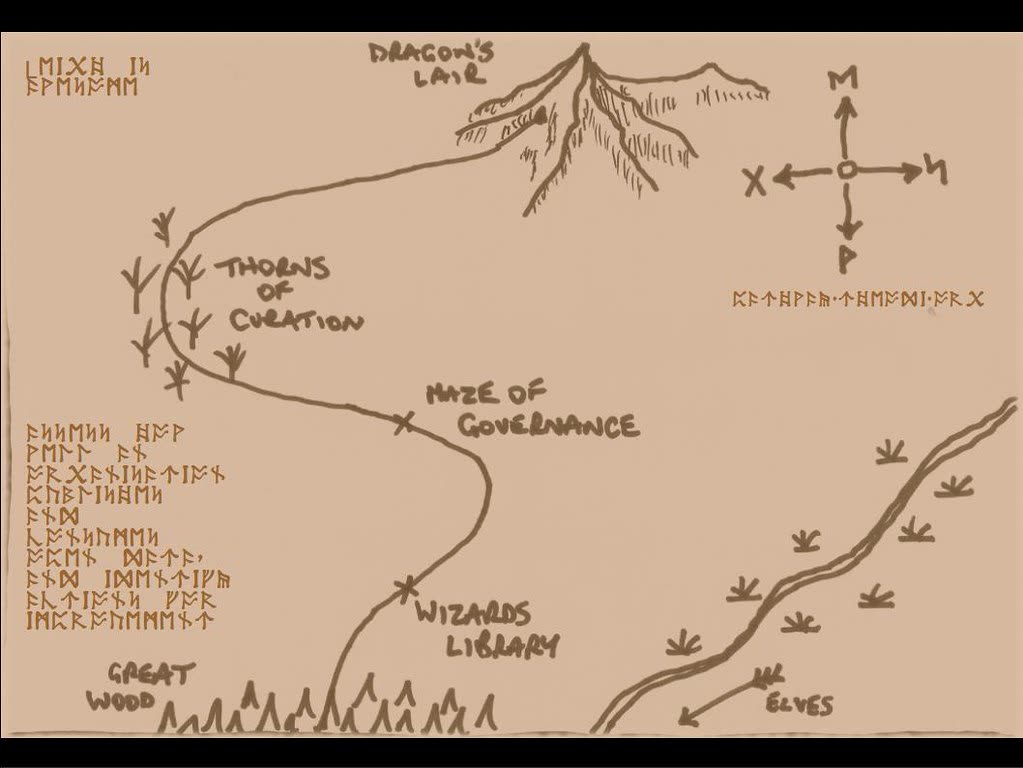 Photo: ldodds via Flickr, public domain
How Long Does a D&D Session Actually Last?
A typical D&D session runs 2 to 5 hours. In a survey of 2,152 D&D players, 42% reported sessions of 2-3 hours and 47% reported sessions of about 4 hours, meaning 89% of all sessions land somewhere in that 2-5 hour window (SlyFlourish poll, 2021).
Nearly 9 in 10 D&D sessions run 2-5 hours, so the real scheduling question isn't "long or short," it's whether you can consistently protect a 2.5-3 hour block.
The two clusters aren't random. The 2-3 hour crowd is largely weeknight groups working around jobs, commutes, and bedtimes. The ~4 hour crowd skews toward weekend games where a whole afternoon or evening is actually on the table. Neither is "correct." A session just needs to be long enough to move the story and short enough that the group can actually show up for it, and for most tables that turns out to be somewhere in the 2-5 hour range regardless of which end they land on.
Frequency matters here too. A separate survey of 1,816 D&D players found 38% play weekly, 24% play twice a month, and 21% play monthly or less (SlyFlourish poll, 2019). Session length and session frequency are two different dials, and tightening one often makes the other easier to turn. A group that shrinks its sessions from 4 hours to 2.5 often finds it's suddenly able to play weekly instead of monthly, because a 2.5-hour block is a much easier ask of five different calendars.
If you're picking a length for a new group, start shorter than feels ambitious. It's easy to add time to a session that's going well; it's much harder to claw back a Tuesday night once four people have already carved out five hours for a game that ran out of steam at hour three. A 2.5-3 hour opening slot gives you room to run it long occasionally without ever having to ask people to clear a whole evening by default.
There's also a real difference between what a session length looks like on paper and what it looks like once social time gets added in. A "3-hour session" often delivers noticeably less actual play time once you account for people arriving, recapping last week, ordering food, and settling in. That's not wasted time, it's part of why people show up in the first place, but it's worth building into the estimate rather than being surprised when a 3-hour block only produces two scenes of story.
How Long Does a D&D Campaign Last, Start to Finish?
A full D&D campaign, generally defined as 20 or more sessions (Roll20), typically takes anywhere from 6 months to 2 years to complete, depending on how often the group plays (Dice Dragons). Weekly groups reach the finish line faster than biweekly or monthly ones, and some official modules run well past a year on their own.
Roll20 frames a full campaign as spanning "a couple of months to over a year or even two," scaling directly with play frequency. Industry estimates from Dice Dragons put the typical range closer to 6 months to 2 years, with sessions happening weekly or biweekly, and note that a published module like Curse of Strahd can take 1-2 years to run start to finish (Dice Dragons). Both are editorial estimates rather than survey data, so treat them as reasonable ranges, not hard benchmarks.
For scale, the record for campaign length isn't measured in months at all. In October 2025, one group of players was awarded a Guinness World Record for the longest-running D&D campaign of all time, at over 43 years (Roll20). That's not a target for anyone reading this. It's proof that the upper bound on "how long can a campaign last" is basically unlimited if a group keeps showing up.
Why So Many Campaigns Never Reach the End
Most campaigns don't get anywhere close to a record, or even to their own planned ending. A 2022 SlyFlourish poll of 2,600 D&D players found that 47% rarely or never reach a satisfying conclusion, with only 21% saying they finish "often" or "almost always" (SlyFlourish poll, 2022). That's not a storytelling problem. It's a logistics problem wearing a storytelling costume: campaigns don't die because the plot fails, they die because the group quietly stops finding a date that works.
If your group is losing momentum to scheduling rather than story, the fix is process, not motivation. The complete guide to scheduling D&D sessions walks through quorum rules, cancellation policies, and the specific habits that keep a campaign's calendar from collapsing.
Campaigns that do reach the end tend to share one habit: they name the ending early instead of letting it drift. Telling your group "we're aiming to wrap this arc in the next 8-10 sessions" turns a vague, open-ended commitment into a finish line people can actually see. It also makes the scheduling conversation easier, because "we have ten sessions left" is a much more motivating pitch than "we'll play until we stop."
One-Shot vs. Campaign: What Are You Actually Signing Up For?
The time commitment for a D&D game depends entirely on the format, and the three common formats sit at very different points on the calendar. A one-shot is a single session, done. A campaign is a standing appointment that can run for years.
A one-shot is designed to be completed within a single session, typically 3-5 hours total (Roll20). You show up once, tell a complete story, and walk away. No standing recurring commitment, no "are we still doing this in six months" question hanging over the group.
A mini-campaign sits in the middle. Roll20 puts the range at roughly 3-10 sessions, while Dice Dragons estimates 4-12, so a safe working number is 3-12 sessions, or a few weeks to a few months of real time at a typical weekly or biweekly cadence. It's the format most new groups should start with: enough sessions to develop real character arcs, short enough that finishing it is realistic. For a group's very first campaign together, industry guidance suggests aiming even more specifically at 8-12 sessions rather than an open-ended saga (Dice Dragons), so the group learns whether it can sustain a long-form story before betting a year of Tuesdays on one.
A full campaign is the multi-year commitment: 20+ sessions and 6 months to 2 years, as covered above. That's a real relationship with a fixed group of people, not a single night out. Before committing to one, it's worth being honest about whether your group's actual attendance rate supports a year-plus timeline, or whether a mini-campaign is the more finishable choice.
There's a fourth option worth naming: the duet campaign, one DM and one player. Scheduling two people is a fundamentally smaller problem than scheduling five, since you're only ever coordinating one other calendar. That difference reshapes the whole time-budget conversation, and it's covered in detail in the ultimate guide to D&D duets.
The honest way to pick between these is to look at your group's actual track record, not its intentions. A group of five that's cancelled three of its last four plans is not a full-campaign group yet, no matter how good the pitch for the next epic story is. A one-shot or a short mini-campaign lets that same group build the habit of showing up before anyone commits to a year-long story that depends on it.
How Does Time Work in D&D, In-Game vs. at the Table?
In-game time and table time are two different clocks that rarely move at the same speed. A real-world hour at the table might cover ten seconds of in-fiction combat, or narrate a two-week journey in one sentence. Knowing when the game slows down and when it fast-forwards lets a DM fit a full story into a fixed session length.
Rounds and turns move at roughly real time. A combat round represents about 6 seconds of in-fiction action, which is why a single fight can eat 45 minutes of table time without the party moving more than a few feet.
Long rests represent a much bigger jump. A long rest is at least 8 hours of in-fiction downtime, during which a character sleeps for at least 6 hours and performs no more than 2 hours of light activity; it restores all lost hit points and a portion of spent Hit Dice, and a character can't benefit from more than one in any 24-hour in-fiction period (D&D Beyond Basic Rules). At the table, that's usually narrated in under a minute: "you make camp, nothing finds you, morning comes."
Short rests are the smaller version, at least 1 hour of in-fiction downtime, used to spend Hit Dice and patch up between longer rests (D&D Beyond Basic Rules).
Travel is where the gap between in-fiction and table time gets widest. At a normal pace, a party covers about 3 miles per hour and 24 miles in a day (D&D Beyond Basic Rules). A DM doesn't play out every hour of a five-day journey. It gets compressed into a montage, maybe five minutes of table time for a hundred in-fiction miles, with a random encounter roll or two along the way.
Downtime activities stretch the gap furthest. Training a new tool or language proficiency requires 250 in-fiction days, resolved narratively rather than played out session by session (D&D Beyond Basic Rules). A character can spend the better part of a year learning to forge armor, and it costs the table maybe two sentences of description between one session and the next.
The pattern underneath all of it: anything that matters dramatically gets played out close to real time, and anything that doesn't gets summarized. That's the actual answer to "how does time work in D&D." It's not one clock, it's a DM constantly choosing which clock to run.
That choice is also a scheduling tool in disguise. Running low on table time with twenty minutes left in a 2.5-hour session? Skip the in-fiction week of downtime with a sentence and pick up mid-scene next time, rather than trying to squeeze a slow travel montage into your last few minutes. The gap between in-game time and table time isn't just flavor text, it's the pressure valve that lets a short real-world session still cover a meaningful chunk of story.
Why Shorter Sessions Are the Easier Scheduling Win
Session length is secretly a scheduling decision before it's a storytelling one. A scheduled 2.5-3 hour session that actually happens beats a planned 5-hour marathon that gets cancelled the morning of, every single time, because a cancelled session delivers zero story and zero momentum no matter how good the plan was.
Shorter sessions are easier to find room for on five different calendars, which is most of what makes them worth choosing over a longer block. The campaign scheduling guide goes deeper on keeping a recurring group's calendar aligned across a whole run of sessions, not just one night at a time.
The other lever, alongside length, is quorum: deciding in advance how many players need to be present for a session to run, so one person's conflict doesn't hold the whole group hostage. That concept is explained fully in what is quorum scheduling. In practice, groups that pair a right-sized session length with a clear quorum rule and an easy way to collect availability tend to actually keep their campaigns alive, because the two decisions remove most of the friction that kills a game before it kills the story.
This is where a tool built for the problem earns its keep. Tabletop Time is free, requires no login for players, and shows quorum-viable dates automatically as availability votes come in, with optional Telegram or Discord reminders so nobody has to remember a session manually. It doesn't make the story better. It just makes sure the table actually happens.
None of this is complicated, but it does require picking a session length your group can actually protect, agreeing on a quorum, and using something better than a group chat to collect availability. Get those three things right, and the campaign has a real shot at reaching one of those SlyFlourish "often" or "almost always" responses instead of joining the 47% that quietly fades out.
So: how long does a D&D session last? Somewhere between 2 and 5 hours, almost always, and the exact number matters less than whether it's a number your group can actually keep. Pick the length, set the quorum, and let the calendar stop being the thing that decides whether the story gets told.